
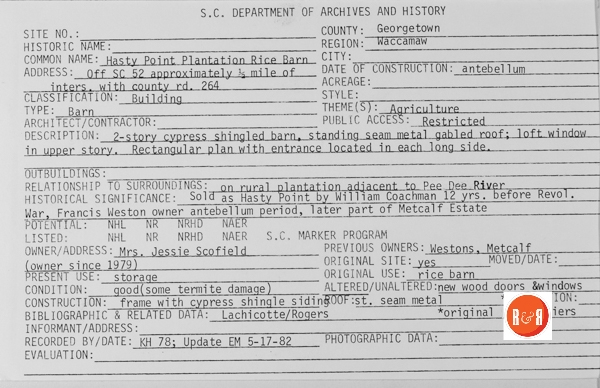


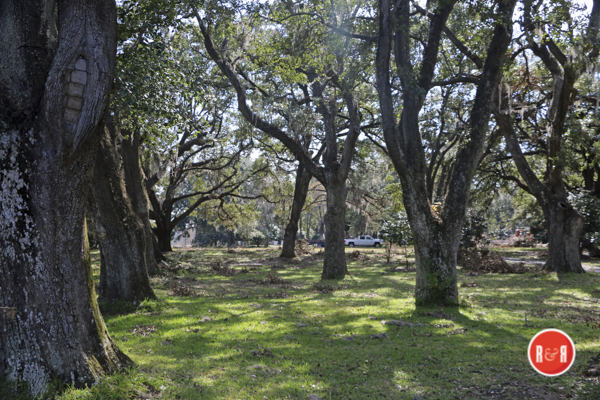


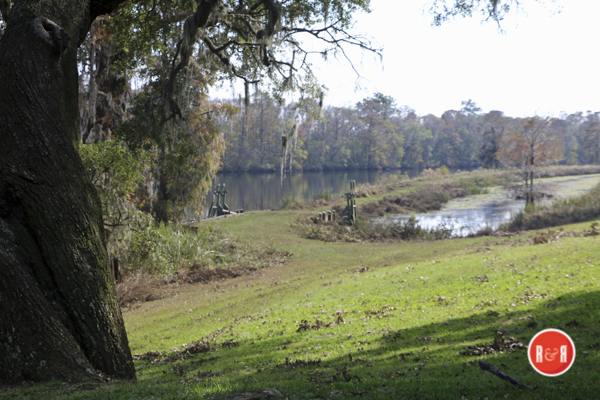
City Directories and History: The Pee Dee River Planters Historic District includes extant buildings, structures, and ricefields associated with twelve rice plantations located along the Pee Dee River (Hasty Point, Breakwater, Belle Rive, Exchange, Rosebank, Chicora Wood, Guendalos, Enfield, Birdfield, Arundel, Springfield, Dirleton) and five rice plantations located along the Waccamaw River (Turkey Hill, Oatland, Willbrook, Litchfield, and Waverly). These plantations were part of a large rice culture in the county which flourished from ca.1750 to ca.1910. The rice culture produced most of the rice grown in South Carolina during that period when the colony, and later, the state, was the leader in rice production in America.
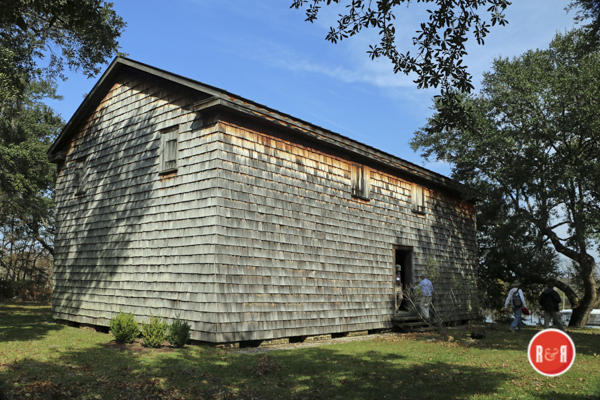
Hasty Point Plantation Rice Barn

Exchange (Asylum) Plantation Rice Barn – Image by Bill Segars, 2017
This district includes four plantation houses (at Exchange, Rosebank, Chicora Wood, and Dirleton); two rice barns (at Hasty Point and Exchange); collections of plantation outbuildings (at Chicora Wood and Arundel); a rice mill and chimney (at Chicora Wood); and historic ricefields with canals, dikes, and trunks. The plantation houses are all frame houses with a central hall plan. Listed in the National Register October 3, 1988. [Courtesy of the SC Dept. of Archives and History]
“Weston, (Dr.) Francis of “Hasty Point” plantation, Plantersville, and Charleston. Born Aug. 12, 1811 (S.C.) ; married Feb. 7, 1833, Elizabeth Blyth Tucker (Dec. 9, 1815-July 5, 1900); died May 8, 1890. Education: S.C. Medical College (1830-32). Church: Episcopalian (Vestryman, Prince Frederick’s, Pee Dee). Other: Member, Winyah Indigo Society. Slaves: 335 (Prince George, Winyah, Parish, Georgetown District).”
The Last Foray, C. Gaston Davidson, SC Press – 1971
“Hasty Point plantation is so named, tradition claims, because
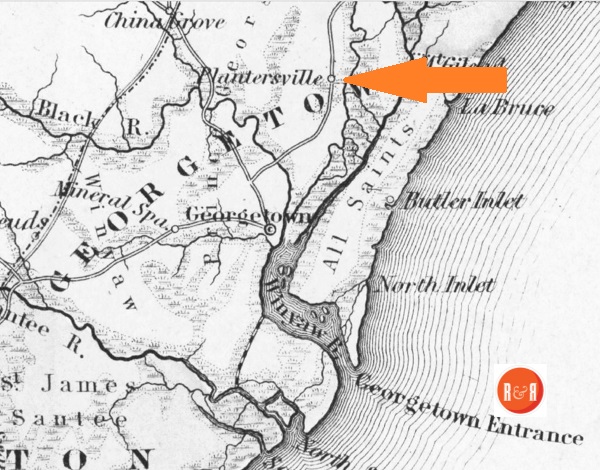
Courtesy of the New York J.H. Colton and Company, 1856; from Colton’s Atlas of the World
General Francis Marion made a hurried escape across the Peedee river here from British forces during the Revolution. With the enemy hot on his trail, the story says, the Swamp Fox jumped into a canoe on the shore of the plantation and paddled up a small creek. The British had trouble finding boats, and when they finally pushed off in the direction they thought Marion had gone, they found themselves in Thoroughfare creek, which leads into the Waccamaw river and which then swiftly carried them away from the wily American general.”
Information from: Names in South Carolina by C.H. Neuffer, Published by the S.C. Dept. of English, USC
Stay Connected
Explore history, houses, and stories across S.C. Your membership provides you with updates on regional topics, information on historic research, preservation, and monthly feature articles. But remember R&R wants to hear from you and assist in preserving your own family genealogy and memorabilia.
Visit the Southern Queries – Forum to receive assistance in answering questions, discuss genealogy, and enjoy exploring preservation topics with other members. Also listed are several history and genealogical researchers for hire.
User comments welcome — post at the bottom of this page.

R&R HISTORY LINK: the 1854 Colton’s Map of Georgetown Co., S.C.
R&R HISTORY LINK: Prince George Winyah Church
Please enjoy this structure and all those listed in Roots and Recall. But remember each is private property. So view them from a distance or from a public area such as the sidewalk or public road.
Do you have information to share and preserve? Family, school, church, or other older photos and stories are welcome. Send them digitally through the “Share Your Story” link, so they too might be posted on Roots and Recall.
Thanks!

User comments always welcome - please post at the bottom of this page.


Share Your Comments & Feedback: