48 Old Haig Point Road
City Directories and History: This lovely little Greek Revival Church was built in ca. 1942 and currently houses the Billie Burn Museum on Daufuskie Island, S.C. The brick columns are original features of the building.
“The church building and its predecessor were built by the Cooper River residents of the north end of the island. The first church was destroyed by a hurricane in 1940, this building was built shortly after that. In time the declining population of the island caused the church to close. In 2001 the Daufuskie Island Historical Foundation bought the property, restored the building, and opened the Billie Burn Museum, named after long-time resident and island historian, Billie Burn. The museum contains artifacts illustrating periods of island history.” (Information courtesy of the Daufuskie island Historical Foundation)
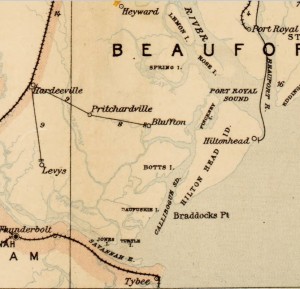
Postal map of the region in ca. 1896 – Courtesy of the UN of NC Archives
Daufuskie Island Historic District includes the geographic entirety of this South Carolina sea island. Accessible only by boat, Daufuskie contains 5,200 acres of mostly high dry land. The district’s character is defined by eighteen properties of particular historic and/or architectural note, and fifty-six contributing sites or structures. Wooded tracts account for another 167 contributing properties. Most of the buildings consist of folk housing, which is concentrated in two building complexes, both on the island’s western side. They were constructed from 1890-1930, but reflect a much earlier building technology. They are significant architecturally as a survival form.
The buildings also include educational, religious, and public buildings which serve the whole population. The design of Daufuskie’s two lighthouses has architectural significance in its structural combination of a functioning lighthouse with living quarters. Other areas of significance are historical in nature. Military engagements of note during the Yemassee and Revolutionary Wars took place on Daufuskie. In addition, buildings, sites, and structures represent Daufuskie’s antebellum plantation society based on the cultivation of long staple cotton as well as the history of the island in the early twentieth century when life revolved around the oyster industry, logging, and truck farming operations. Daufuskie’s cultural resources illustrate a three-century long history (ca. 1700-1930) that has evolved with a minimum of outside influence. Listed in the National Register June 2, 1982. Click here to see the nominating form for the properties. [Courtesy of the SC Dept. of Archives and History]
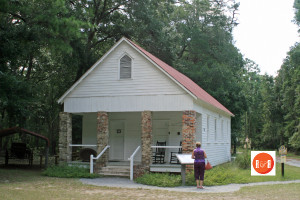
Images courtesy of photographer Bill Segars – 2013
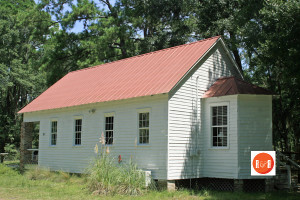
Mt. Carmel Baptist Church
The 1981 historic survey map of Daufuskie Island does not correspond to the numbering system on the historic survey cards – pictures. R&R has noted on each page the correct corresponding number. See enlargeable maps of Daufuskie Island’s historic survey at: Daufuskie Historic Survey Maps.
Click here for additional information on Daufuskie Island. And see enlargeable Daufuskie Island maps under the More Information links.
Take time to visit both the Palmetto Trust and Daufuskie Island Historical Foundation’s (DIHF) websites, to see how you might engage, in helping preserve the local Daufuskie Island’s culture and architecture.
Membership in R&R
Stay connected with R&R, “Explore S.C. history, historic houses, & family stories…” Sign up for a R&R membership. Members receive the “From the Porch” blog, updates on regional topics, and targeted notifications of their choice. Membership also includes travel opportunities: Carolina DeJaunts. Login and prioritize your specific points of enthusiasm: R&R Login. If you only wish to receive the “From the Porch” newsletter and no additional membership content, use the R&R Blog signup form.
User comments welcome – post at the bottom of this page.
Please enjoy this structure and all those listed in Roots and Recall. But remember each is private property. So view them from a distance or from a public area such as the sidewalk or public road.
Do you have information to share and preserve? Family, school, church, or other older photos and stories are welcome. Send them digitally through the “Share Your Story” link, so they too might be posted on Roots and Recall.
Thanks!