
City Directories and History: CALHOUN MANSION
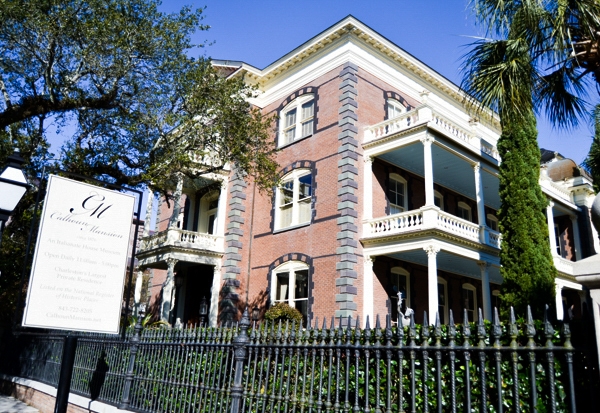
Constructed circa 1876; restored 1970s, 1980s William P. Russell, architect
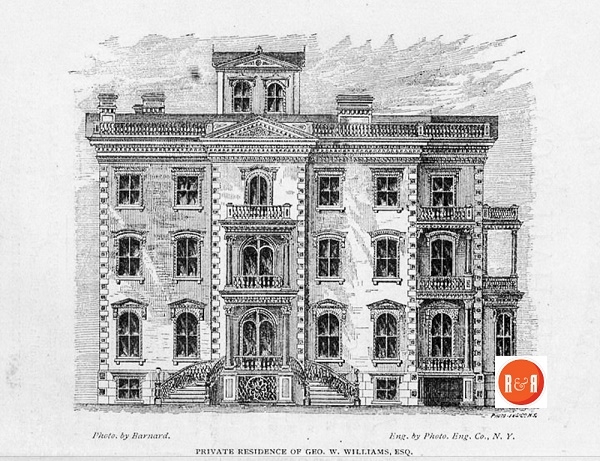
“When this house was completed, an article in the News and Courier referred to it as probably “the handsomest and most complete private residence in the South.” Encompassing nearly 24,000 square feet of living space, the residence was built by George Walton Williams, a local businessman who made a large fortune in the years before and during the Civil War. Williams, a native of Augusta, Georgia, began his Charleston business career in 1852, importing sugar and molasses from the West Indies and bagging from India. By the 1860s he had stores, warehouses, and industrial complexes in the peninsular city, as well as the Carolina Savings Bank at 1 Broad Street.
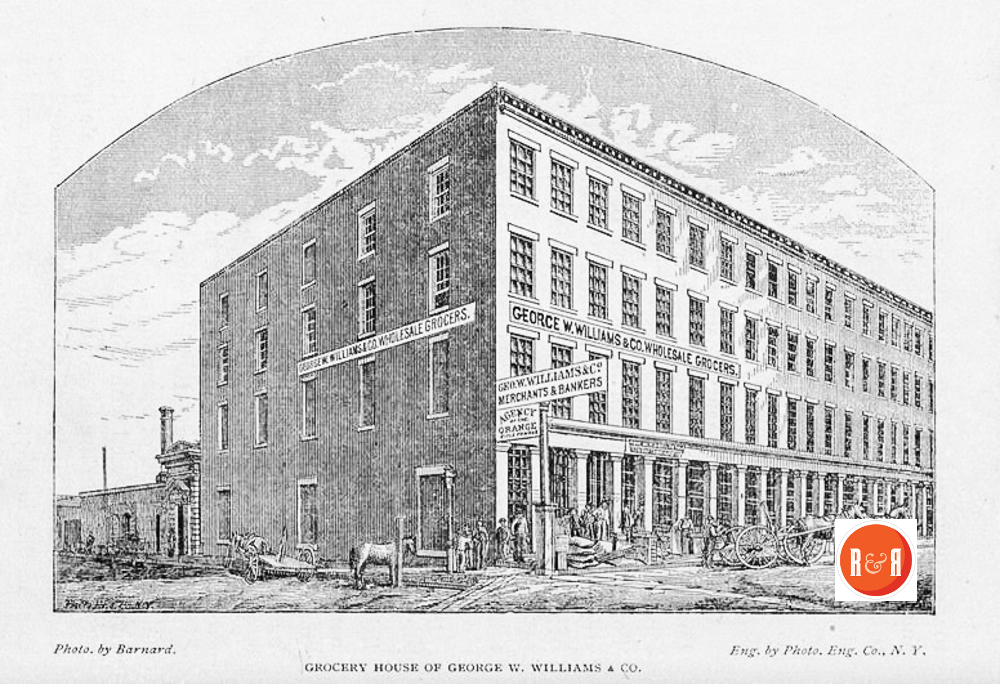
Etching of George Williams massive grocery concern in 1875 – Courtesy of the Guide to Charleston, S.C.
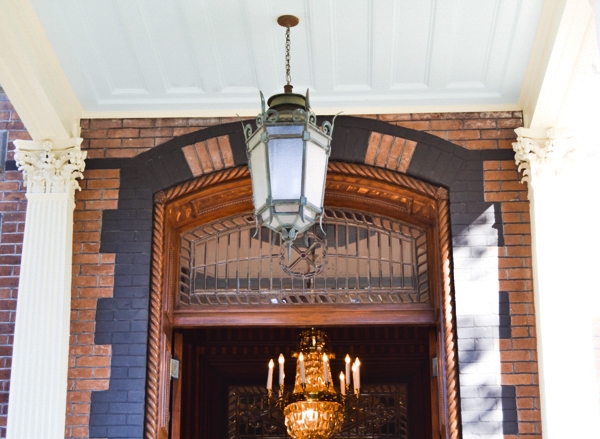
With its twenty-five rooms, the Williams House is considered to he the largest single family residence in the city and includes elements of Italianate and Renaissance Revival styles. Its contrasting colors and textures of pressed brick, Corinthian-columned portico and side piazzas, as well as the period rope design around openings reflect the eclectic mix of national styles with homage to Charleston vernacular building traditions. The interior of this building boasts original walnut and oak woodwork, Minton encaustic tiles, and splendid gas chandeliers. For several generations the structure has been called the Calhoun Mansion in honor of one of its former owners, Patrick Calhoun, a grandson of John C. Calhoun, who married one of George Walton Williams’s daughters. The house is privately owned but is open to the public as a museum.” Information from: The Buildings of Charleston – J.H. Poston for the Historic Charleston Foundation, 1997
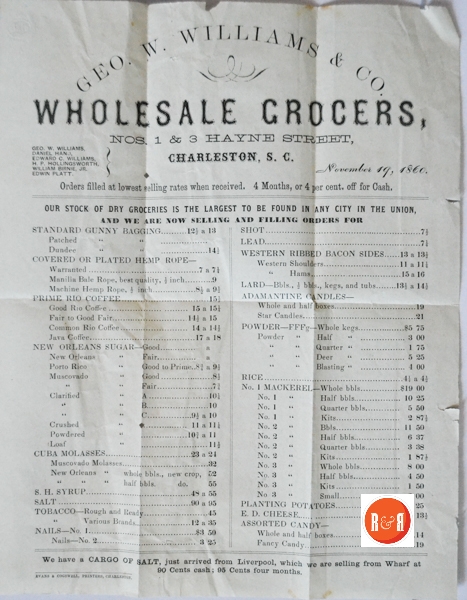
Williams had a tremendous business including the patronage of Ann H. White of York County, S.C., who purchased a number of household goods from the store in November of 1860, as well as, James “Enoree” Anderson in Spartanburg, S.C. Another important structure connected to Mr. Williams was his daughter’s home at #2 Meeting Street.
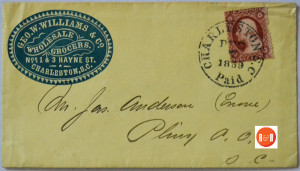
Envelope mailed to James Anderson in Spartanburg, S.C. at Anderson’s Mill from the grocery concern. Courtesy of the Douglas Collection – 2015
Other sources of interest: Charleston Tax Payers of Charleston, SC in 1860-61 and the Dwelling Houses of Charleston by Alice R.H. Smith – 1917 The HCF may also have additional data at: Past Perfect and further research can be uncovered at: Charleston 1861 Census Schedule or The Charleston City Guide of 1872
Membership in R&R
Stay connected with R&R, “Explore S.C. history, historic houses, & family stories…” Sign up for a R&R membership. Members receive the “From the Porch” blog, updates on regional topics, and targeted notifications of their choice. Membership also includes travel opportunities: Carolina DeJaunts. Login and prioritize your specific points of enthusiasm: R&R Login. If you only wish to receive the “From the Porch” newsletter and no additional membership content, use the R&R Blog signup form.
User comments welcome – post at the bottom of this page.
Please enjoy this structure and all those listed in Roots and Recall. But remember each is private property. So view them from a distance or from a public area such as the sidewalk or public road.
Do you have information to share and preserve? Family, school, church, or other older photos and stories are welcome. Send them digitally through the “Share Your Story” link, so they too might be posted on Roots and Recall.
Thanks!

User comments always welcome - please post at the bottom of this page.


Share Your Comments & Feedback: